
The Hemp-Hole Closes: A Call for the Great Coming Together of Cannabis
 by Jason Piazza on January 9, 2026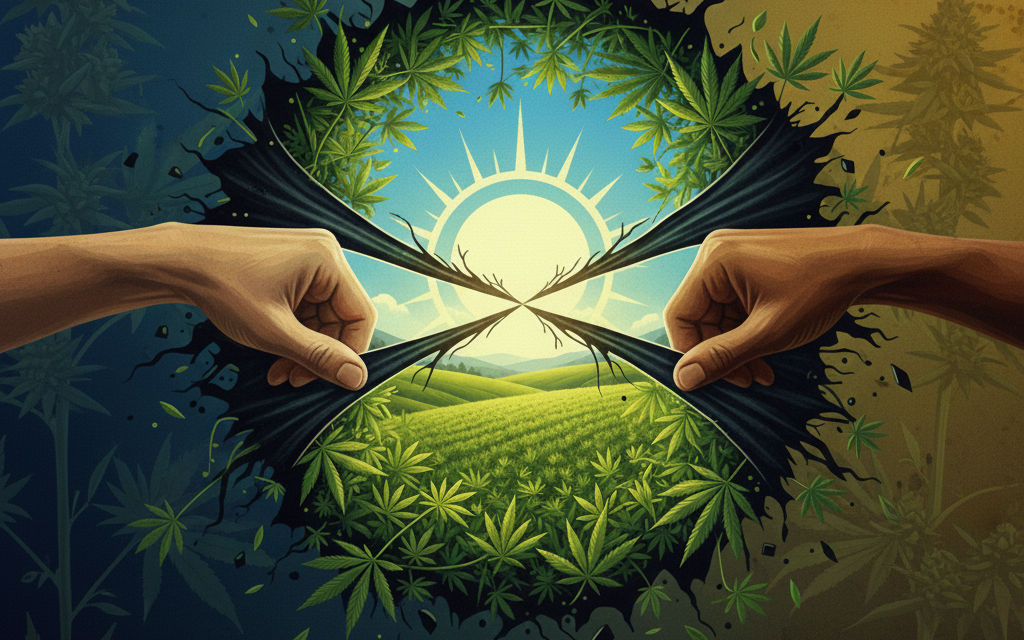
Originally drafted on November 14, 2025
When the 2018 Farm Bill legalized hemp, it was framed as an agricultural revival — a chance for struggling farmers to plant a crop once central to America’s industrial heritage. But buried within that legislation was a single definitional flaw: hemp was defined only by its Delta-9 THC concentration, not by total intoxicating potential. That one oversight cracked the door open for chemists to convert CBD into psychoactive forms of THC — Delta-8, Delta-10, HHC, THCA — compounds chemically identical in effect to marijuana. Gas stations became dispensaries. Grocery stores became head shops. The illicit market didn’t disappear; it simply changed its wardrobe.¹
And at the center of this transformation stands Senator Mitch McConnell, the very architect of hemp’s federal comeback. In 2018, he called it “Kentucky’s next great cash crop.” Seven years later, he is leading the effort to close the very loophole he created. McConnell now insists that his intent was to create an agricultural hemp industry, not an unregulated marketplace for intoxicants.² For many in Kentucky, the about-face feels like betrayal. Business owners warn that the new 0.4 mg THC-per-container cap “would make our least potent product unsellable.”³ But make no mistake — this was not contradiction. It was choreography.
But this next chapter will not automatically belong to the people who built the cannabis industry. It will belong to whoever shows up with the most unified, well-funded lobbying effort. And right now, that’s not us — it’s them. The same corporate interests that have perfected alcohol, tobacco, and pharmaceuticals are already positioning themselves to inherit the regulated cannabis market the moment Congress opens the gates.⁴
That’s the real urgency of this moment. The hemp-hole didn’t just expose the gap in federal policy — it exposed the gap in our own coordination. The cannabis industry still doesn’t have a unified voice in Washington. We have associations, alliances, PACs, and lobbyists — but no shared message, no clear leadership, and no cohesive vision for what federal reform should look like. Licensed operators see each other as rivals, not colleagues. Multi-state operators fight to protect market share while legacy brands fight to survive. And hemp farmers, who absolutely deserve a place in the legal framework, have been cast as the enemy rather than collaborators in a sustainable future.
Meanwhile, the clock is ticking. The federal reset is already underway. When the new definition of hemp takes effect next year, the market will tighten, consolidation will accelerate, and new regulatory structures will begin to form. The only question is whether the cannabis industry — the people who built it from the ground up — will help write those rules or be written out of them.
The great coming together I’m calling for isn’t about consolidation or capitulation. It’s about survival. It’s about unity across every corner of this industry — from cultivation to retail, from hemp to high-THC, from medical to adult-use — to demand sane, evidence-based, and inclusive federal cannabis laws. If we don’t come together, we will watch as the same forces that dictated alcohol, tobacco, and pharmaceutical policy do the same to cannabis.
The hemp-hole is closing, but the real window of opportunity is now open. The next year will determine who shapes the future of American cannabis: those who built it, or those who waited for it to be built.
The test run is over. The results are in. The people have spoken. Now it’s time for the industry to finally do the same — together.
References
1. The Washington Post. “Congress tightens THC restrictions on hemp, closing farm bill loophole.” November 13 2025. Link
2. Louisville Public Media (LPM). “McConnell advances bill to ban intoxicating hemp, closing his own 2018 loophole.” July 10 2025. Link
3. WLKY News Louisville. “Kentucky hemp businesses warn new federal cap would make products unsellable.” July 2025. Link
4. Reuters. “Deal to end U.S. government shutdown strikes buzzy cannabis drinks industry.” November 14 2025. Link